Showing posts with label poly. Show all posts

Tuesday, May 14, 2013

Inventing Concepts: God, Love, and Poly Labels


Why is the idea of God so popular, so hard for societies to shake off despite the evidence? Like all ideas, “God” is an invention of human consciousness. Developed over thousands of decades by great and weak minds alike. “God” has taken on a life of its own (literally). But again, there was a time when our caveman ancestors weren't aware of the concept of “God.”

“God”—as constructed by the human mind—is the embodiment of superhuman qualities. Some noble, others not so much. However, like all concepts, if you ask 50 people what “God” is like, you will get 53 answers.
When you say you love God what does it mean? It means that you love a projection of your own imagination, a projection of yourself clothed in certain forms of respectability according to what you think is noble and holy; so to say, 'I love God', is absolute nonsense. When you worship God you are worshiping yourself - and that is not love."   J. Krishnamurti
For each individual, then, “God” is a projection of our best self. The person we would be if we weren't so … well, human. To that I say: What’s so wrong with being human?

Likewise, “love” is another attempt to label a human experience. We've all used the word “love” and we assume others know what we mean. To some extent, every individual has experienced love, or at least it’s opposite. But again 50 questions, 53 answers.

Even philosophers going back to the Greeks couldn't agree on the meaning of “love.” Plato said that love is beauty, and this is just as true today. And just as useful?!

So, then what does it mean, practically, for my life tonight when I’m making love or praying to my self-burlesqued deity? Like “love,” “God” is just a concept, constructed around a human experience. There is no reality of either to discover, no proverbial curtain to pull back and suddenly understand.

I have no problem with belief in “God” if that helps you. The same way I use the word “love” with my children and partners. But when I do, I’m aware that the “love” I feel for them is a pitiful attempt to label a human experience that can’t really be defined, contained or explained.

Understanding concepts in this way helps me to view labels as impermanent and inexact. It fills me with compassion for others, especially for people or ideas society labels as “evil.” Again, just a concept invented by humans.

It works the same with the labels we attach to relationships. I read a lot of static on poly boards about relationship labels: “primary,” “secondary,” “boyfriend/girlfriend,” “FWB,” etc. A lot of whining too about not attaining the desired label with a partner, or using the wrong label. Are “secondary” partners really secondary? And similar shit.

What’s important is that you know what your relationship is, where it’s at, where it’s going (or not going), what your partner thinks about you. If you need a label (or feel uncomfortable about an assigned label), it’s time to blow the insecurity whistle. Labels for people outside the relationship, who don’t know the intimate details. Labels carry no meaning of their own. It’s only the meaning we bring to them. Being upgraded from “girlfriend” to “ fiance” doesn't change your relationship one iota.

My recommendation: only use relationship labels when necessary, with the understanding that they do a shitty job of classifying your relationship. Otherwise, decide they don’t exist, end the conversation and start enjoying the human being next to you.

Tuesday, April 23, 2013

Marriage Manifesto, Part I: A Biblical History


Advocates for one man, one woman marriages base their argument on Christian values and "God's plan" for marriage. An examination of Biblical passages regarding marriage, however, reveals this traditional model is not a Biblical concept.

Marriage is not about sex or love, it's about ownership, property.


In Biblical times. woman were viewed as property. A man who had reached a certain amount of status and wealth sought to marry/own a wife. Exodus 20:17: “You shall not covet your neighbor's house; you shall not covet your neighbor's wife, or his male servant, or his female servant, or his ox, or his donkey, or anything that is your neighbor's.” Wives were the property of their husbands, same as his servants and asses.

A woman's sexuality was also his property. Her sexuality belonged to her father until he sold/married her to her husband, or the highest bidder. Men were permitted to have sex with their slaves as this was also their property. The major difference between wives and slaves was the status of offspring. Legitimate male babies were in line to inherit their father's wealth. Legitimate female babies could be sold as a wife. Any illegitimate offspring would only demand the price of a slave, male or female.

Nowhere in the Bible does it say marriage is between one man and one woman.


Today, rich men collect expensive cars, large estates or private islands. The nomadic Patriarchs collected beautiful women to display their wealth. Men were permitted to have as may wives as they could afford. More wives meant a greater number of offspring, another symbol of wealth.

Women, however, could not have more than one husband, as she could only be owned by one man at a time. Having sex with a man who was not her husband was considered adultery and punishable by death. Think about that the next time you take your friend's expensive car out for a joy ride.

Even in the New Testament, while polygamous marriage was less common, women were still the property of their husbands. Permitted to speak to other men only in very limited circumstances.

There are no instances where Jesus or any of the New Testament writers specifically define marriage as one man with one woman.This is because it is assumed that the Law of Moses (read: Old Testament) statutes still apply. If Jesus wanted to deviate from the Jewish Law - which the Jews of his time followed literally - he would have spoken directly on the matter.

There is no such thing as "the way it's always been."


Monogamous marriage has only existed as the cultural norm for the last couple of centuries. The option of choosing one's marriage partner (at least for women) has only been realized in the last 200 years.

Views on societal norms are changing, have always been changing, and will continue to change long after you and I have vacated the planet. Only 200 years ago, slavery was viewed as "the way it has always been and always will be."

There is no final destination when it comes to defining human relationships. How we define them will change as we come to understand oursevles better individually and collectively.

Tuesday, April 9, 2013

Possessive Language and Relationships


I've got a beef with the way we talk about relationships by using possessive language. Is the problem with the language itself or with us who are using it?

Let me explain. I melt over stupid love songs played on the radio as much as the next chick. But I absolutely cringe when these songs contain possessive phrases like, "I've gotta have you," (Taylor Swift's 22) "I'm yours," (Jason Mraz's I'm Yours), and I'm sure you can think of your own sappy lyrics to add to this list.

There is some instinct in each of us when we see something beautiful we want to have it. We want to hold on to it, and put it away in a drawer or up on a wall. It's not the "thing" that we really want, of course. It's the feeling we got when we first laid eyes on that butterfly flitting through the weeds. The feeling we have when we someone beautiful or handsome smiles at us. The feeling we get laying naked next to someone we love and feeling loved in return. It's the feeling we want, but it is impossible to physically hold on to a feeling. So, instead, we make it our mission to possess the thing that gave us the feeling.

Why is this a problem? What makes these precious moments such an emotional high is that they are free and spontaneous. If you clip that gorgeous tulip and bring it indoors, it will look much the same for 24 hours, but after that it will begin to lose the very essence you craved it for in the first place. Neither being possessed nor possessing bring back that original sense of wonder.

It is not romantic to feel like someone owns you, except maybe if you're BDSM, but we'll set those folks aside for now. (Nothing personal, you just complicate my argument a bit. Feel free to follow up with your own BDSM model of healthy possessiveness.) The real problem is that with all of these cultural messages telling us that love owns or controls us, we start to believe it. We truly start to think, If I can't control my beloved then he doesn't really love me. If I don't have a solitary claim to her affection then I've lost her.

As polyfolk, of course, we know that's not true. We've lived it. But there are still people out there who think like that. And it's not just control over outside relationships these "lovers" want control of. We've all met this type: my girlfriend can only dress a certain way, can only be out so late, can only talk to members of the same sex, on and on it goes. This is love?

Perhaps a possessive person behaves this is the way to keep from getting hurt? Controlling my beloved's behavior and relationships will make me feel safe, and I will never be in danger of losing the good feeling her love brings me. First of all, this is a completely self-absorbed mode of thinking. I might be hurt, so you're not allowed ...

Secondly, I don't know about you, but I only want to be with someone who wants to be with me. I don't want to spend my precious time with someone who's there only because I make them. That makes me feel even less desired and loved than if I was just alone.

Before my husband and I opened up our relationship, we had had many talks about how we didn't want to be in a relationship with each other just because we were married, because we felt we were stuck. We were clear with each other, saying, "I only want you to be here with me, if that's what you really want." The point was to get rid of the idea that we somehow laid claim to the desires of the other.

Not putting demands or guilt trips on a loved one means that when they are there with you, that's where they really want to be! And that feels great! This is not to say you shouldn't ask for what you want and communicate your needs to your partners. These are requests, however, not demands. And turning down a partner's request carries no threat of repercussion. The goal of any loving relationship is to love your partner, not keep them "locked up" for your own gratification.

Where did we ever get this idea that LOVE = CONTROL? (*Sigh* Alright BDSM, go to town ...)


Monday, April 1, 2013

Diluting Disappointment


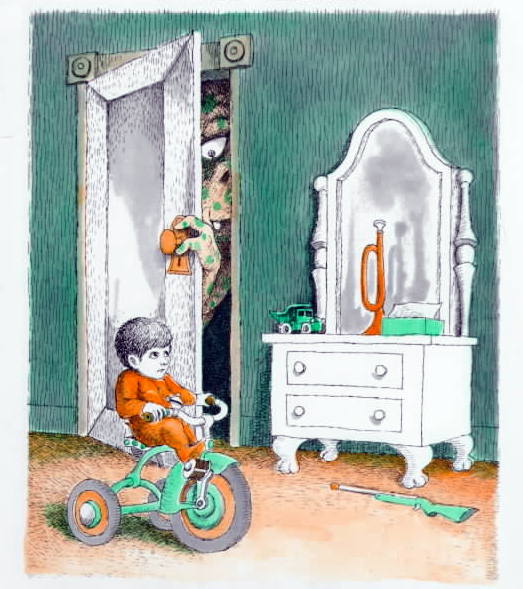
In the poly world it seems that jealousy often equates to the Boogie Man. But recently, I have come to recognize my own acute sensitivity to disappointment. When I am disappointed by a person, an event, even myself at times, the nightmare in my closet emerges. Disappointment is my Jealousy.

I took me some time to come to this epiphany. I mean, for most people, disappointment isn't exactly on the same level with Jealousy. So what's the big deal?

I started to recognize a pattern in my relationships. Someone would fail to live up to one of my expectations. It could be as simple as cancelling a date, or a repeated irritation like leaving a mess of globby toothpaste on the sink.

My initial reaction is anger. How could they do this to me! For toothpaste-like infractions, I might even launch stupid angry phrases at my beloved: Why do you keep doing this?! Don't you know how much it upsets me?! It makes very little sense to anyone just looking at the messy sink, but the issue goes deeper than that.

Next, I start to feel worthless. If he's cancelled our date, I must have done something wrong. I must not be good enough. And, finally, abandonment: He doesn't really want to be with me. If he did, he'd clean up the sink every night. *Sigh* I am a silly girl.

I'm not a naturally jealous person. So, it made no sense to me why I would care if a partner decided to take the evening to pursue other interests. It became plainly obvious to me that this was my issue when my lover wasn't even going to meet up with someone else. He just needed some personal time. Can a sane person really be jealous of that? Hmmm, seems I'm fresh out of bodies to blame.

Being with the same partner for ten years has helped me to step back and look really hard at my own reactions: Is this something to be upset about? What is really going on here? And separating reality from the crazy, delusional distopian fantasy my anxiety invents.

Freud would be thrilled to hear me say that it all goes back to my mother. I really try not to blame things on her any more. And I certainly don't think my problems are all her fault. But she had tendency when I was growing up to leave me places, forget to pick me up, disappear until well after midnight, etc. So, when she disappointed me by not coming to my choir concert, poetry reading, tennis match, extra-special, extra curricular, well, my childhood psyche felt worthless. And, in time, psychologically abandoned. Though there were times I was physically abandoned as well.

BAZINGA! (I ♥ Sheldon.) So now, knowing the situations that trigger my disappointment/abandonment, and understanding where these pesky emotions come from, I have an arsenal of reassurances in place. I haven't gotten to the point where I need to write them down, but I'm not too proud if it gets that far.

Also, I am blessed to be married to such an understanding soul. He sees my emotions for what they are: powerful disillusionment. He doesn't discount how debilitating they feel. And he's willing to serve up reassurances as necessary.

Regardless of the strong emotions I feel, they belong to me. Blaming my rotten feelings on the actions of others won't ever make me feel better and, in the long run, may actually make me feel worse by driving away those people actually willing to put up my crazy.


Wednesday, March 27, 2013

Our America's Take on Polyamory


Here's 6 reasons why I just plain like this spot:

  1. These are real people, not at all like the glamorized people on other (so-called) reality shows. (I'm looking at you Showtime.) I can actually see how these people could be anyone I know.
  2. These individuals are vulnerable, and they are comfortable being so. They don't come off as overly confident and emotionally impenatrable. They recognize the vulnerable position their relationship structure places them in. They know they can be hurt, but the message that comes across is that what they gain vis-a-vis polyamory is worth the risk.
  3. They talk about how opening an existing relationship deepens the relationship. And I think this deepening extends to all relationships a person can have. Not just of the romantic/sexual variety.
  4. They make it clear that they're not finished growing. Personal growth is emphasized as an ongoing process for a polyamorous framework. Additionally, their current relationship structure isn't set in stone. They are open to, though not necessarily actively searching for, new partners. As a group and as individuals, they are a living growing, changing organism. Perfect.
  5. They have a blog of their own where you can follow their story! athiest, polyamorous, skeptics
  6. They are playing Settlers of Catan! YES WE CATAN!
For once, television got it right.

Tuesday, March 19, 2013

Only Unicorns Need Apply


Unicorn:
A bisexual female, sought as the third wheel to a male/female couple; or, a rare, MYTHICAL beast with magical qualities, sought to bestow eternal life.

Today, I have a few angry words to say about unicorns. Not to the unicorns, but the hunters. There is nothing wrong with the idea of unicorns, and if you are one, more power to you. Seems you have the pick of the lot. 

A relentless search for the perfect, ideal lover who meets not one, but two individual's grocery lists of requirements. Is this how we treat people? Is this how you would want to be viewed as a potential lover?

Anyone with even a little experience in relationships will tell you that ordering partners from a menu just doesn't work. Purple and Green (both female) meet at a party and hit it off. Love at first sight? Maybe. Green meets Purple's husband, Brown. Green is just the kind of unicorn they've been looking for. But by the end of the night, Brown just can't get past Green's laugh. It's pitchy and goes on way too long. Purple's in love. Now what? Is Green out the door? So long?

Successful relationships (friendship, romantic, sexual or otherwise) take the person who is in front of them, with all their idiosyncrasies and warts. If this person has potential as a romantic or sexual partner: Bonus! Prerequisites: (1) Am I attracted to this person? (2) Can our current circumstances match up in a way to make this relationship possible?

I am sick to death of poly discussion boards and groups being used as The Great Unicorn Hunt. While I am certainly in favor of any form of a loving relationship that brings fulfillment and satisfaction to all participants, I am against searching out specific kinds of partners or situations.

Poly is not about being edgy or sexually fashionable. It is about being open to different kinds of relationships with whomever is in your life. Deep connection can happen with anyone and any kind of relationship. Searching for a specific type of person (unicorn, centaur or other?) for a specific type of relationship ... well, that feels juvenile. If you can't be happy right now, with the people in your life right now, you won't find yourself any happier should you finally capture that mythical creature.

That's not to say that there's anything wrong with "getting out there" and meeting new people with the hope of finding someone special. However, by limiting the "someone specials" to unicorns, you could be missing out on a different kind of totally mind-blowing relationship.

It's like being a tall woman. Countless times I've had tall women friends tell me they would never consider dating a man who was shorter than them. Too self-conscious, maybe? I laugh and count the handful of men I would have never even attempted to date, including my husband. How silly, and  sad.

I say, give up the unicorn hunt and start looking at the beautiful, interesting people around you. You might just surprise yourself.

Tuesday, February 26, 2013

The Safe Relationship Path

While discussing the concept of polyamory with a friend, she replied in typical monogamist think: "But where will the relationship go?" She was talking about  my secondary relationship: the person I see who I am not married to and don't live with.

Her question is a glowing beacon on the reason that our monogamous culture can't accept polyamory as a lifestyle. For them, relationships follow a pattern; they have to "go" somewhere. I was told when I was young that I would meet "the one" (presumably my soul mate) and fall in love, and date, and marry, and have kids and grow old with this all-encompassing completion of my soul in the form a living, breathing person. Talk about pressure. How does even the most willing of individuals live up to something like that?

How many beautiful, loving relationships end because one or both partners believe the relationship has to go somewhere? How often do movie couples split because one wants kids while the other feels compelled to see the world? Must be that they weren't "meant" for each other. This is what we're taught by Hollywood, books, our parents, the old lady down the street.

We are finally living in a society that questions religious beliefs like never before. Yet humanity seems to be stuck with this notion of "one and only forever." Relationships, whether they be friendships, romantic, sexual, take on forms of their own if we let them. And they're not permanent forms either. They're constantly in flux. Society doesn't place such stringent restrictions on our friendships. In fact, friendships span generations, time, space, race, and any other barrier. But if you want to be more than friends ... well, there's only one way to do that kind of relationship.

I suggest fear is the reason for humanity's inability to let go of this childhood fairy tale. Being vulnerable with a lover is so much more dangerous (we think) than with a friend. So, if I'm going to submit myself to the possibility of being truly vulnerable with someone, then it's going to be within the safe, predictable environment of "the right path." This way I can't get hurt, at least that's what we think.

We all know how it ends though. Rarely do people who start out on this path make it to the "growing old together"  stage. (Kudos to those who do. But I hope you did it out of joy and not obligation.) No, people get divorced, they have affairs, they break up, they end up in jail for domestic violence. This is a safer way to be vulnerable?

The truth is there is no safe way to be vulnerable with another human being. That's what makes it so beautiful, wonderful. You take the chance and you fly or you fall. In the end, that's what makes it all worth it.

k